$12 Million for the Right of Way: Lebanon Road’s Widening Clears Its Next Hurdle
If you have sat on Lebanon Road at the wrong hour, you already understand the project. If you have not, here is the short version: a road built for a Wilson County that had far fewer people in it is now carrying the traffic of one that has a great many more, and the pinch point has become a fact of daily life for a large slice of Mt. Juliet.
The fix moved a meaningful step closer this month.
Mt. Juliet has been awarded $12 million in federal transportation funding for the next phase of the Lebanon Road Widening Project. The money came through the Greater Nashville Regional Council and the region's Transportation Policy Board — the bodies that decide how federal transportation dollars get distributed across the Nashville area.
What the money actually does
This is the part worth being precise about, because “we got $12 million for the road” and “they are about to start paving” are very different statements.
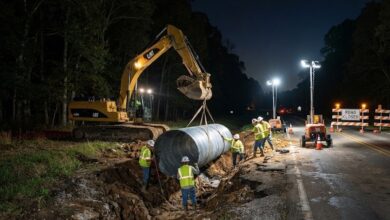
The $12 million funds right-of-way acquisition — buying the strips of land along the corridor that the wider road will need to occupy. It is the unglamorous, slow, legally intricate phase that has to be finished before a single piece of equipment shows up. It is also, routinely, the phase that stalls road projects for years.
Construction money is expected to follow. The city anticipates roughly $24 million in additional federal grant funding for the build itself. The grants cover 80 percent of eligible costs; Mt. Juliet is responsible for the remaining 20 percent.
The stretch in question
The project widens Lebanon Road to five lanes between Park Glen Drive and Curd Road, then tapers from five lanes back to three at the end of the segment.
Crucially, it is designed to tie into work TDOT recently finished near West Elementary. That matters more than it sounds. Corridor improvements done in isolated chunks have a habit of simply relocating a bottleneck a half-mile down the road — you widen one section and the backup reappears exactly where the new pavement ends. Connecting this segment to the completed state work is the difference between fixing a corridor and moving a problem.
Where this sits in the bigger picture
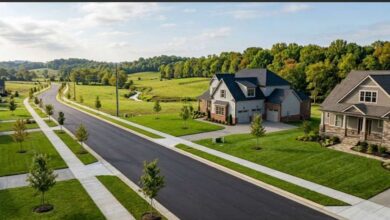
Mt. Juliet's growth has been one of the more dramatic stories in Middle Tennessee. A community that functioned for decades as a quiet stop east of Nashville has become a full-fledged city with a commuter rail station, a retail base, and subdivisions filling in ground that was pasture inside living memory.
Roads are the part of that transformation that cannot be rushed. A subdivision goes up in eighteen months; a five-lane arterial takes the better part of a decade from concept through right of way to ribbon. The gap between those two timelines is essentially the whole of Mt. Juliet's traffic experience — and it is why local transportation planning here has become a genuinely high-stakes civic exercise. We looked at the wider picture in our coverage of Wilson County's transportation panel, from rail ridership to the county's other widening projects.
For now, the useful takeaway for drivers is a modest one: no cones are going up this fall. What just happened is that the phase before the cones got paid for — which, in the arithmetic of road building, is the step that actually determines whether the rest ever happens.